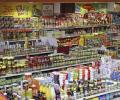
Fast-moving consumer goods (FMCG) companies anticipate sustained volume pressures in the January-March quarter (Q4) coupled with sluggish rural growth during the period. Brokerages estimate top-line growth to be in low single digits in the quarter. Also, the late onset of winter had an impact on demand for winter products which range from moisturisers to hot beverages.

Ahead of the seven-phase Lok Sabha elections, keeping food prices under check has emerged as one of the topmost priorities for the government. Food prices would likely have a bearing on the preferences of voters. In the past, there have been instances when governments have been voted out over rising food inflation.
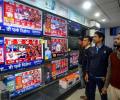
Consumers may have to shell out more to buy television panels as manufacturers say they may raise prices again in April. The industry has been facing this issue of price rise post the pandemic and open cell prices have gone up by around 30 per cent in the last one year. And, television panel manufacturers expect this trend to continue.
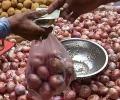
Onion and potato production is expected to be down in the 2023-24 crop year, while the tomato output could be marginally higher, the Department of Agriculture's first advance estimates of horticultural output released on Thursday showed. "Production of onion in 2023-24 is expected to be around 25.47 million tonnes compared to around 30.20 million tonnes last year due to a decrease of 3.43 million tonnes in Maharashtra, 0.99 million tonnes in Karnataka, 0.35 million tonnes in Andhra Pradesh and 0.31 million tonnes in Rajasthan," the official statement by the department of agriculture said.

Furniture retailer Ikea India on Thursday said it will shut down its store in Mumbai's R City Mall by the middle of this year and explore omnichannel formats in the city. The store at R City Mall, which is spread across 72,000 sq ft, opened in June 2022 to test the viability of small-format stores. The company's plan to shut down the store illustrates the concerns surrounding the viability of running a small-format store, given the rising rentals.

The central government plans to increase the number of highly beneficial neem trees in the country from the existing one tree for every 50 Indians to one tree for every 10 Indians to meet the rising demand from different sectors for neem oil. Presently, India has 18-20 million neem trees in the country, of which 40-45 per cent are in Uttar Pradesh, followed by Maharashtra, Rajasthan, and Tamil Nadu, among others. To achieve the target, the number of neem trees has to rise to almost 140 million.
'In staples, we have still managed in rural areas.'

In India, fast-moving consumer goods (FMCG) majors continue to hold sway, with incumbent brands cornering 65 per cent of the market share, shows a Bain & Company report. While identifying the continued preference of Indians for incumbent brands, the report says that the dominance of general trade in the country has allowed national brands to maintain their supremacy. The low penetration of e-commerce in the country has also helped large brands.

'On the final product, there can be an increase of a minimum of 10 per cent in February and March.'

'Will make sure that we create value. We will again look for organic and inorganic opportunities.'

FSSAI is looking to tap the Airport Health Organisation to ensure that such incidents aren't reported in the future.

A few days back, Atul Ganatra, president of the Cotton Association of India, presented a grim scenario of the crop's prospects in the 2024-25 season that starts in October. Addressing the association's annual general meeting, Ganatra said the area under the crop could go down by at least 10 per cent in the coming season due to falling yields and realisation, leading to farmers losing interest. The fear of a decline in acreage comes against the backdrop of India's cotton production probably falling to its lowest in a decade, according to estimates.

As Ayodhya readies itself for the glittering, much-awaited consecration ceremony of the Ram Mandir on January 22, and as millions of pilgrims and devotees pour into the holy city for the momentous event, companies are rushing to do their bit and be a part of the mega celebrations. Some are offering a part of their profits as donations, telcos are beefing up the number of cellular towers to ensure better connectivity, and there are those distributing jalebis and food platters.

Retail companies are expected to witness a tepid strong same-store sales growth (SSSG) expansion in the third quarter (October - December) of the current financial year (Q3FY24) on the back of subdued sales in the festival season. The third quarter of the financial year typically witnesses higher sales since it coincides with the festival season. This time around, weak customer sentiment has dragged down SSSG.

'Due to rural stress, volumes continue to remain an issue for the industry, and we are yet to see any revival in demand.'

Chief Economic Advisor (CEA) V Anantha Nageswaran considers absolute poverty a more direct and pressing concern for India. He argues that inequality is a relative concept. Simultaneously, with formerly economically deprived sections joining the ranks of the middle class, policy attention needs to extend beyond 'roti, kapda, makaan' to keep the growth engine up and running.
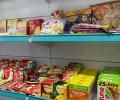
Companies manufacturing fast-moving consumer goods (FMCG) continue to see rural stress sustain and it continues to trail urban demand. At the Confederation of Indian Industry's FMCG summit, managements of various companies pointed out urban demand continued to grow while rural demand remained under pressure because incomes were under stress in rural areas. "Due to rural stress, volumes continue to remain an issue for the industry and we are yet to see any revival in demand," Sudhir Sitapati, managing director (MD) and chief executive officer (CEO) at Godrej Consumer Products

Godrej Consumer Products has launched a new brand of liquid detergent Godrej fab in South India, four decades after introducing Godrej Ezee, the country's first specialised liquid detergent tailored for winter wear and woollens, in 1983. The Mumbai-based company decided to launch another brand of liquid detergent despite having Godrej Genteel liquid detergent.

Hindustan Unilever (HUL)'s decision to split its beauty and personal care division and place a renewed focus on digital has been driven by its aim to serve the consumer of tomorrow, say analysts and brand experts. HUL managing director and chief executive officer Rohit Jawa is looking to make the company 'future ready', and while these bets are not for the short-term, they will eventually pay off as the Indian consumer is young and digital friendly, they add. "Rohit Jawa comes with digital experience and he is preparing to steer HUL into serving the future consumer who is more digital friendly," said Sachin Bobade, vice-president at brokerage firm Dolat Capital.

If states have to fall in line with MSPs declared by political parties, they will have to do so in violation of central order or bear the full expense of the surplus procured at above MSP rates.
 © 2026 Rediff.com - Investor Information - Advertise with us - Disclaimer - Privacy Policy - Sitemap - Feedback - About us - Terms of use - Grievances